By CJ Obende Deborah
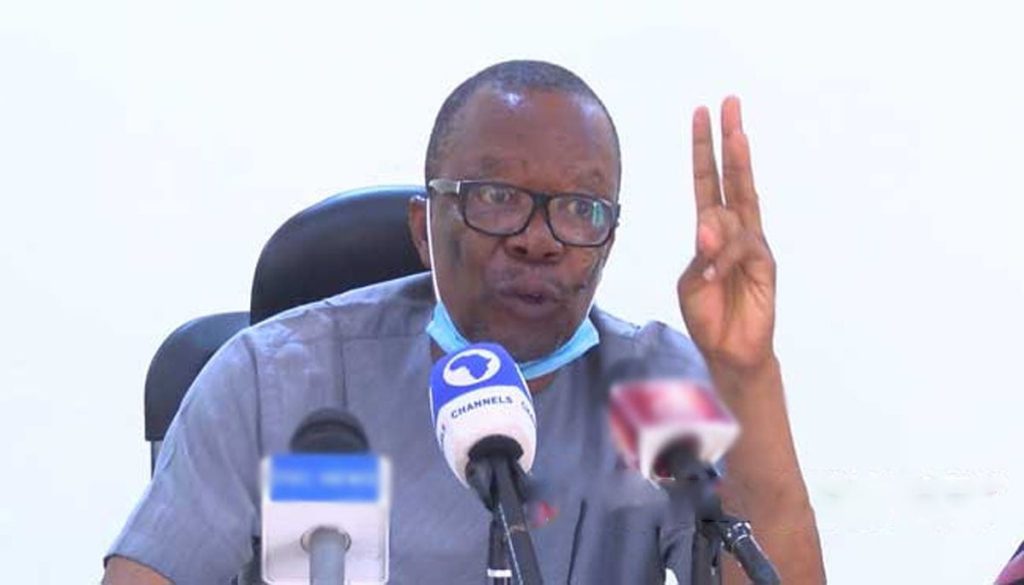
The President of the Academic Staff Union of Universities (ASUU), Prof. Emmanuel Osodeke, has issued a dire warning, stating that nearly 50% of Nigerian university students may be forced to drop out within the next two years unless the Nigerian government intervenes to curb the rising cost of university education.
During an interview on Channels TV on Sunday night, September 24, 2023, Prof. Osodeke expressed deep concern about the exorbitant fees imposed on students across the country, foreseeing a potential surge in dropouts due to the financial strain on students and their families. He questioned the logic of escalating tuition fees in an environment where the minimum wage stands at N30,000 per month, coupled with the additional expenses of rent and transportation, stating, “Today, universities are arbitrarily increasing tuition fees. Is that correct in an environment today where the minimum wage is N30,000 per month and where they have to pay rent and pay heavily for transportation? And you are enforcing this thing on the students?”
Prof. Osodeke further predicted that without significant intervention, “in the next two or three years, more than 40 to 50 per cent of these students who are in school would drop out.”
Highlighting the severity of this potential crisis, the ASUU President stressed that such a mass exodus of students from the educational system could have dire consequences for the nation’s stability.
He emphasized the need to restore the educational environment to the standards of the 1960s and 1970s when education was more accessible to all. Prof. Osodeke expressed sympathy for students from modest backgrounds who struggle to afford the excessively high school fees, stating, “School fees of N300,000; how can the children of someone who earns N50,000 a month be able to pay such a fee?”
In urging the government to allocate a minimum of 15 percent of the total budget to education, Prof. Osodeke argued that increased budgetary allocation would alleviate the financial burden on parents and students.
Regarding the government’s student loan policy, he expressed skepticism about its effectiveness and advocated for a comprehensive review, suggesting that it should be reframed as a grant rather than a loan.
ASUU President Warns: Half of Nigerian University Students Face Dropout Risk Due to Soaring Fees